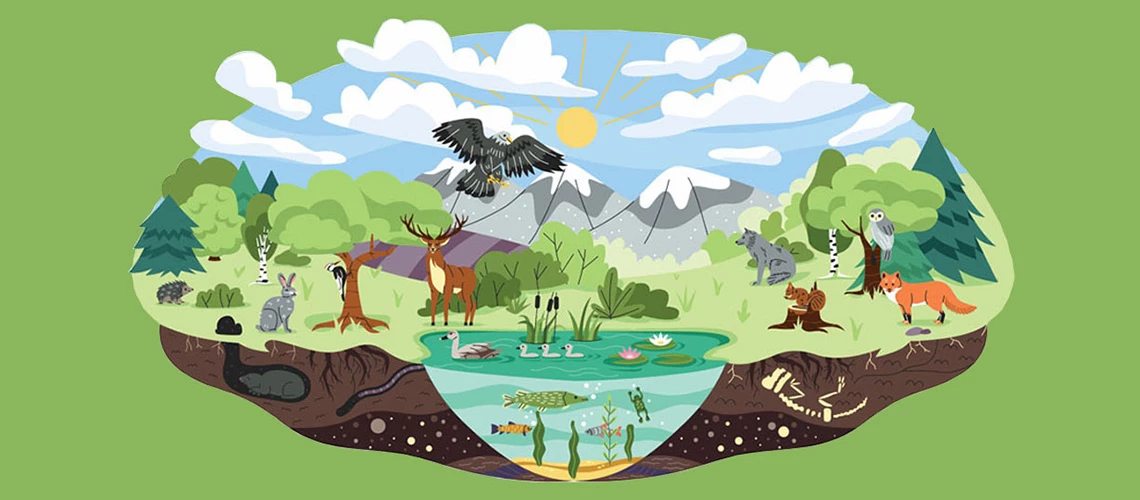
What Is Biodiversity?
Biodiversity includes all living things, from tiny insects to large mammals, as well as plants, fungi, and microorganisms. It also covers the ecosystems where these organisms live, such as forests, oceans, and wetlands.
How Human Activity Affects Biodiversity
Habitat Destruction
Building cities, farming, and logging destroy or fragment natural habitats. When animals lose their homes, they struggle to survive or reproduce.
Pollution
Chemicals, plastics, and waste pollute air, water, and soil. Pollution harms wildlife, damages ecosystems, and reduces biodiversity.
Climate Change
Burning fossil fuels and deforestation increase greenhouse gases, warming the planet. Changing temperatures and weather patterns affect species’ survival and migration.
Overexploitation
Overfishing, hunting, and collecting plants faster than they can reproduce reduce populations and can lead to extinction.
Invasive Species
Humans sometimes introduce species to new areas, either accidentally or intentionally. These invasive species can outcompete native ones and disrupt ecosystems.
Why Biodiversity Matters
Biodiversity supports food security, clean water, medicine, and climate regulation. It also provides cultural and recreational benefits. Losing biodiversity can weaken ecosystems, making them less resilient to change.
What Can We Do?
Protecting biodiversity requires reducing pollution, conserving habitats, managing resources sustainably, and addressing climate change. Supporting conservation efforts and making eco-friendly choices help preserve life on Earth.
Final Thoughts
Human activity has greatly impacted biodiversity, but with awareness and action, we can reduce harm and protect the natural world. Preserving biodiversity ensures a healthy planet for current and future generations.