Algumas coisas úteis para você
Selecionamos algumas coisas interessantes que podem ser do seu interesse
Beyond the Scan: How to Retarget Offline Audiences with Digital Ads
To create a QR code for a link, video or picture - click on the button below.


Article Plan
- What is QR Code Retargeting and How Does It Work?
- Key Platforms for Digital Advertising Retargeting
- Step-by-Step: How to Add Retargeting Pixels in ME-QR
- Scaling Offline Intent with Custom and Lookalike Audiences
- High-Converting O2O Retargeting Strategies by Industry
- High-Converting O2O Marketing Retargeting Use-Cases Across Industries
- Static vs. Dynamic QR Codes for Retargeting
- Bridge Your Offline and Online Campaigns with ME-QR
- Frequently Asked Questions
A billboard, magazine ad, product package, or event flyer can capture attention, but it cannot drop a browser cookie. Traditional print media creates initial interest, but once a potential customer walks away, that high-intent lead is often lost forever.
Dynamic QR codes with embedded tracking pixels solve this offline blind spot.
By combining online and offline marketing strategies, performance media buyers and modern businesses can seamlessly bridge the gap between physical foot traffic and paid digital advertising channels. With ME-QR, every scan of your printed collateral becomes a measurable data point—firing tracking pixels, populating custom audiences, and powering high-converting retargeting campaigns across Meta, Google Ads, TikTok, and LinkedIn.
Whether you run a multi-channel campaign for digital marketing or deploy targeted promotions in physical retail locations, pixel-enabled dynamic codes transform static media into a dynamic, performance-driven digital sales funnel.
What is QR Code Retargeting and How Does It Work?
QR code retargeting is an online to offline marketing strategy that automatically captures real-world scanners and converts them into segmentable digital ad audiences.
When a user scans a dynamic QR code created in ME-QR, they are instantly routed through a high-speed short URL. During this fraction-of-a-second redirection layer, embedded tracking parameters fire your Meta Pixel, Google Tag Manager (GTM), or TikTok Pixel before landing the user on their final destination page.
Why Pixel-Enabled Dynamic QR Codes Outperform Static Print Ads
- Cookieless Audience Building: Capture real-world user intent instantly upon scan without relying exclusively on website-level cookie pop-ups.
- Zero Website Restrictions: Retarget users even if you direct them straight to third-party marketplaces on Amazon, social profiles, or app stores where you cannot install website tracking scripts manually.
- Granular Campaign Segmentation: Assign different tracking pixels, GTM containers, or UTM parameters to individual print placements to keep your remarketing lists clean and hyper-targeted.
Key Platforms for Digital Advertising Retargeting
With ME-QR, executing a retargeting marketing strategy is effortless. You do not need deep web development experience—simply paste your tracking IDs directly into your ME-QR dashboard.
1. Meta (Facebook & Instagram) Pixel Integration
Integrating your Meta Pixel ID into dynamic links allows every physical scan to trigger a facebook website retargeting event. This enables you to build hyper-specific meta custom audiences composed of offline scanners and nurture them with sequential Instagram video ads, carousel offers, or social proof.
2. Google Ads Offline Conversion Tracking & GTM
Adding Google Tag Manager to your dynamic codes powers your broader google ads remarketing campaign. You can feed offline engagement metrics into Google Analytics 4, execute google offline conversion tracking, and serve targeted Display, Search, or YouTube ads to users who previously scanned your physical touchpoints.
3. TikTok & LinkedIn Pixel Retargeting
For youth-oriented brands or B2B campaigns, embedding TikTok Pixels or LinkedIn Insight Tags enables account-based retargeting right after an offline conference, trade show, or product launch.

Step-by-Step: How to Add Retargeting Pixels in ME-QR
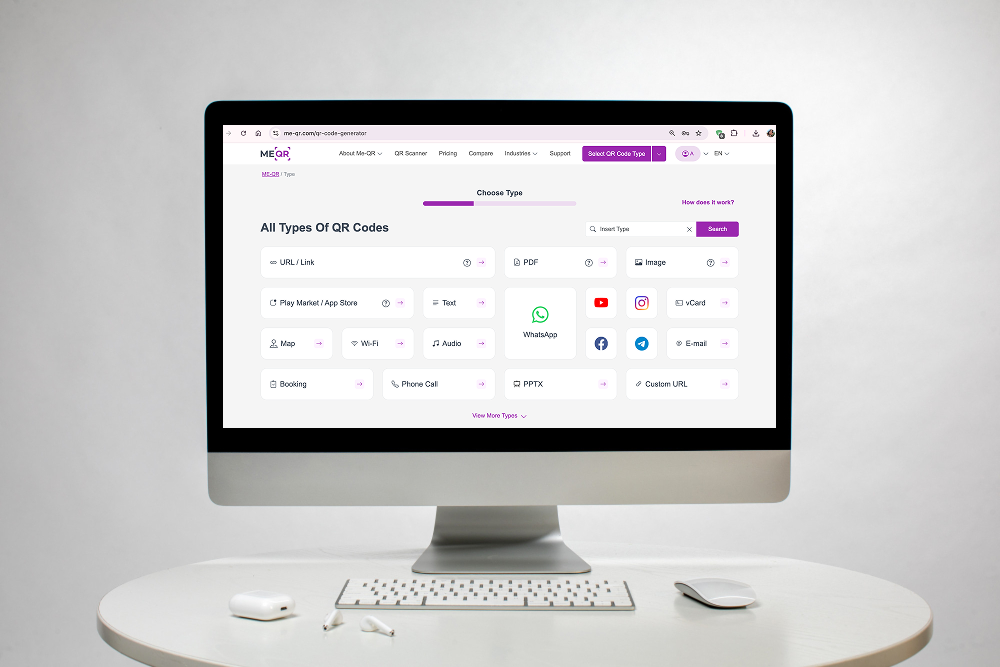
Using a QR code generator with analytics and native tracking pixel support like ME-QR takes only a few simple steps:
- Access Your Dashboard: Log in to ME-QR and click Create QR Code.
- Select Your Solution: Choose a dynamic solution suited to your campaign, such as a custom landing page, a multi-destination URL, or a downloadable PDF document.
- Input Content & Tracking IDs: Enter your destination link and expand the Pixel Retargeting / Analytics settings tab.
- Paste Your Pixel Parameters: Insert your Meta Pixel ID, Google Tag Manager container ID, or TikTok Pixel ID.
- Customize & Download: Personalize your code layout, pick custom brand colors, and export high-resolution files for printing.
Pro Tip: Always test your dynamic QR code using a smartphone camera before sending marketing collaterals to print. Verify that the scan event registers correctly inside Meta Events Manager or Google Tag Assistant.
Scaling Offline Intent with Custom and Lookalike Audiences
Unlocking maximum return on ad spend (ROAS) from audience retargeting goes beyond showing ads exclusively to people who scanned your physical codes. You can leverage real-world scanner data to acquire thousands of new, lookalike prospects.
Once your ME-QR campaign collects a baseline volume of scans (typically 100+ interactions), you can leverage lookalike audience targeting in Meta Ads Manager or Google Ads:
- Seed Audience: Your primary custom and lookalike audiences seed list is populated by active offline scanners.
- Algorithmic Expansion: Select the create lookalike audience option inside your ad manager to target the top 1–2% of users who share online behavioral and demographic traits with your real-world offline audience.
This transforms localized print marketing into a scalable, nationwide digital marketing retargeting acquisition engine.

High-Converting O2O Retargeting Strategies by Industry
Integrating online and offline marketing channels provides measurable advantages across various business verticals. The table below outlines how different sectors leverage dynamic pixel tracking to optimize their digital campaigns:
|
Industry Sector |
Offline Touchpoint |
QR Code Destination |
Retargeting Strategy & Ad Creative |
|
E-Commerce & Retail |
Product packaging / Inserts |
Digital User Manual or Warranty Form |
Cross-sell related accessories and refills via Meta Carousel Ads |
|
Real Estate |
Yard signs / Printed catalogs |
Virtual Property Tour Landing Page |
Serve Facebook Ads showcasing similar local property listings |
|
Restaurants & Hospitality |
Tableside menu displays |
Digital Menu / Ordering Portal |
Run Instagram feed ads promoting weekend specials or loyalty programs |
|
Events & Conferences |
Promotional flyers / Badges |
Schedule & Speaker Lineup PDF |
Deploy LinkedIn retargeting ads featuring case studies and demo CTAs |
|
Direct Mail Marketing |
Postcards & Direct Mailers |
Special Promo Offer Page |
Re-engage non-converting readers with targeted Google Display Ads |
High-Converting O2O Marketing Retargeting Use-Cases Across Industries
1. E-Commerce & Retail Product Packaging
Insert dynamic QR codes onto product boxes or user inserts that link to warranty registrations, digital manuals, or video demos. The embedded pixel builds a retargeting marketing audience of verified buyers. You can then run cross-sell ads for accessories, refills, or seasonal upgrades.
2. Real Estate Property Tours & Signage
Real estate agents placing yard signs or print brochures can link directly to virtual tours or property listings. Visitors scanning the sign are automatically added to a facebook ad retargeting workflow, receiving targeted ads showcasing similar property listings or open house invitations.
3. Hospitality, Dining & Menu Scanning
Venues in the restaurants sector utilizing digital tableside menus can capture dining foot traffic into digital audiences. Later, run retargeting ads promoting weekend specials, catering services, or loyalty program sign-ups on Meta and Google.
4. Events, Conferences & Ticket Sales
Event organizers driving ticket sales through direct promotional flyers or banners can utilize custom code designs to build an event attendee audience for post-conference follow-up campaigns.
Static vs. Dynamic QR Codes for Retargeting
|
Feature |
Static QR Codes (Basic) |
ME-QR Dynamic QR Codes (Advanced) |
|
Pixel Retargeting Support |
❌ No (Cannot embed pixels) |
✅ Yes (Meta, GTM, TikTok supported) |
|
Editable Destination URL |
❌ No (URL fixed permanently) |
✅ Yes (Update destination anytime) |
|
Scan Analytics & Metrics |
❌ No tracking available |
✅ Total scans, location, OS, device types |
|
Custom & Lookalike Audiences |
❌ Impossible to build |
✅ Fully supported via redirection pixel |
|
A/B Testing & Redirection |
❌ Fixed single path |
✅ Dynamic URL changes & UTM tracking |
Bridge Your Offline and Online Campaigns with ME-QR
Stop allowing offline prospective leads to slip away. By embedding Meta Pixels, Google Tag Manager, and TikTok tracking directly into your dynamic QR codes, you convert static print collateral into a measurable, scalable digital acquisition funnel.
Ready to maximize your campaign ROI? Generate your pixel-enabled dynamic QR code with ME-QR today!
Frequently Asked Questions
Yes! That is a major advantage of ME-QR. Because tracking pixels fire on ME-QR’s dynamic short URL redirection layer, you can attach retargeting pixels to QR codes pointing to third-party marketplaces, social profiles, PDF documents, or app store pages.